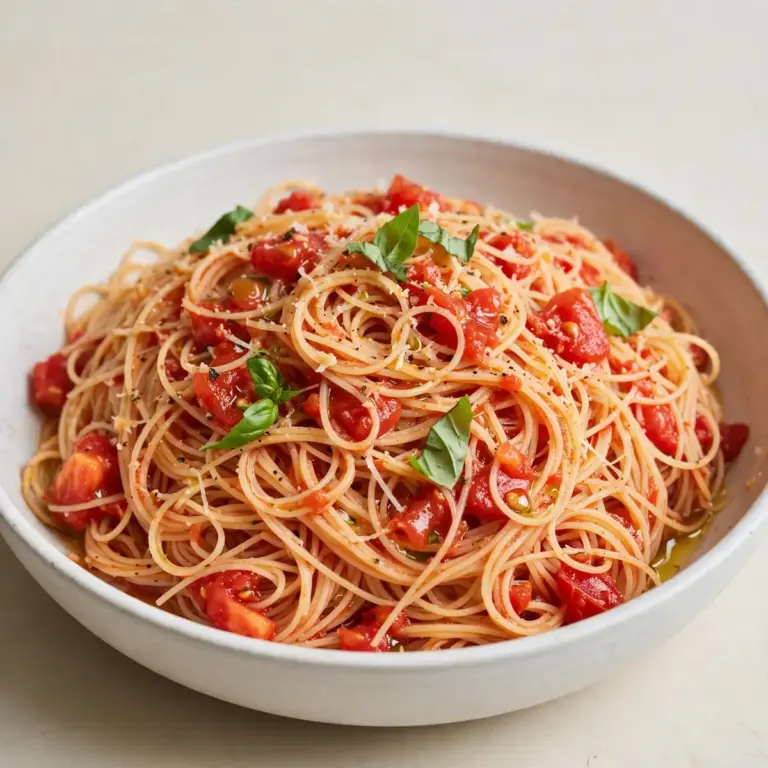
No Cook Fresh Tomato Sauce
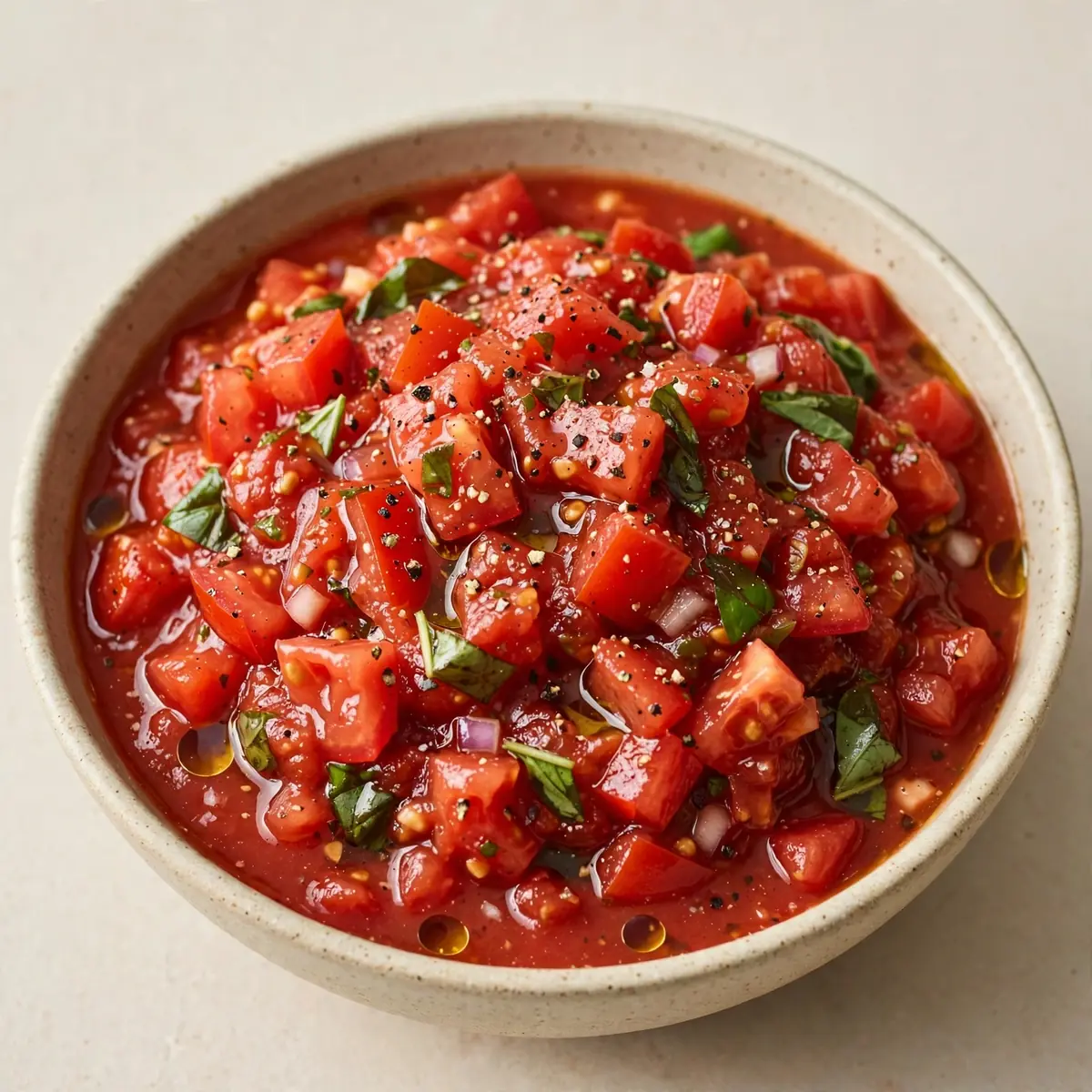
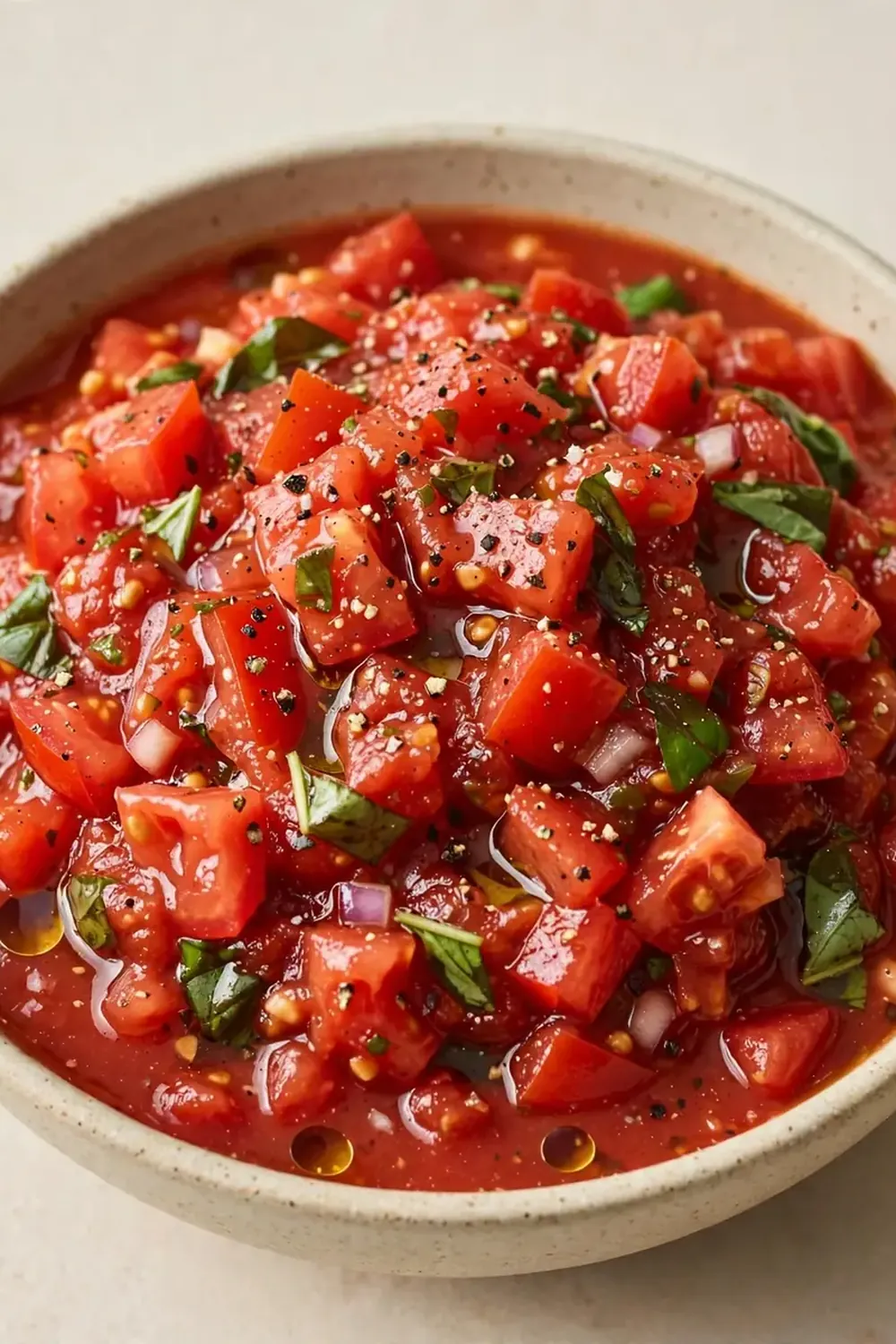
Between the school run, after-work tasks, and the general chaos of a Tuesday, the last thing I want is a sink full of dirty pans. This no cook fresh tomato sauce is my secret weapon for those nights. It’s ready in the time it takes to boil pasta, requires almost no washing up, and tastes like a sun-drenched summer garden, even on a drizzly autumn evening.
Recipe Overview
- Prep Time: 10 minutes
- Cook Time: 0 minutes (just time for the pasta to boil)
- Total Time: 20 minutes
- Servings: 4 generous portions
- Difficulty: Easy
Why You’ll Love This No Cook Fresh Tomato Sauce
- Blazing Speed: There’s no simmering, no stirring over a hot stove. You toss the ingredients together while the pasta water comes to a boil. Dinner is on the table in a flat twenty minutes.
- Minimal Cleanup: You use one cutting board, one bowl, and one serving dish. No sticky saucepan to scrub, no splattered hob. My husband, who’s usually picky, asked for seconds, and I barely had to wash a thing afterwards.
- Bright, Fresh Flavour: Because the tomatoes aren’t cooked, they retain their lively, tangy sweetness. The raw garlic and basil give it a punch that a jarred sauce simply cannot match.
- Perfect for Make-Ahead: The sauce can be prepared hours in advance, or even the night before. The flavours actually meld and deepen as it sits at room temperature, making it an ideal prep-ahead solution for busy weeknights.
- No Heat in the Kitchen: On those sweltering summer days when turning on the stove feels unbearable, this sauce is a lifesaver. The only heat you produce is for the pasta itself.
Ingredients You’ll Need
- 1 kg ripe vine tomatoes (or large Roma tomatoes)
- 4 cloves of garlic, finely minced
- 1 large handful of fresh basil leaves, roughly torn
- 120 ml extra virgin olive oil
- 2 tablespoons balsamic vinegar
- 1 teaspoon sea salt flakes, plus more for pasta water
- ½ teaspoon freshly cracked black pepper
- 1 teaspoon caster sugar (to balance acidity, if needed)
- 500 g dried spaghetti or other long pasta
- 80 g Parmesan cheese, finely grated (or vegetarian alternative)
- Optional: pinch of dried chilli flakes for a little warmth
Tip: The quality of this sauce depends entirely on your tomatoes. Use the ripest, most fragrant ones you can find — from a local farmers’ market or your own garden if possible. Bland, pale tomatoes will result in a bland sauce.
How to Make No Cook Fresh Tomato Sauce
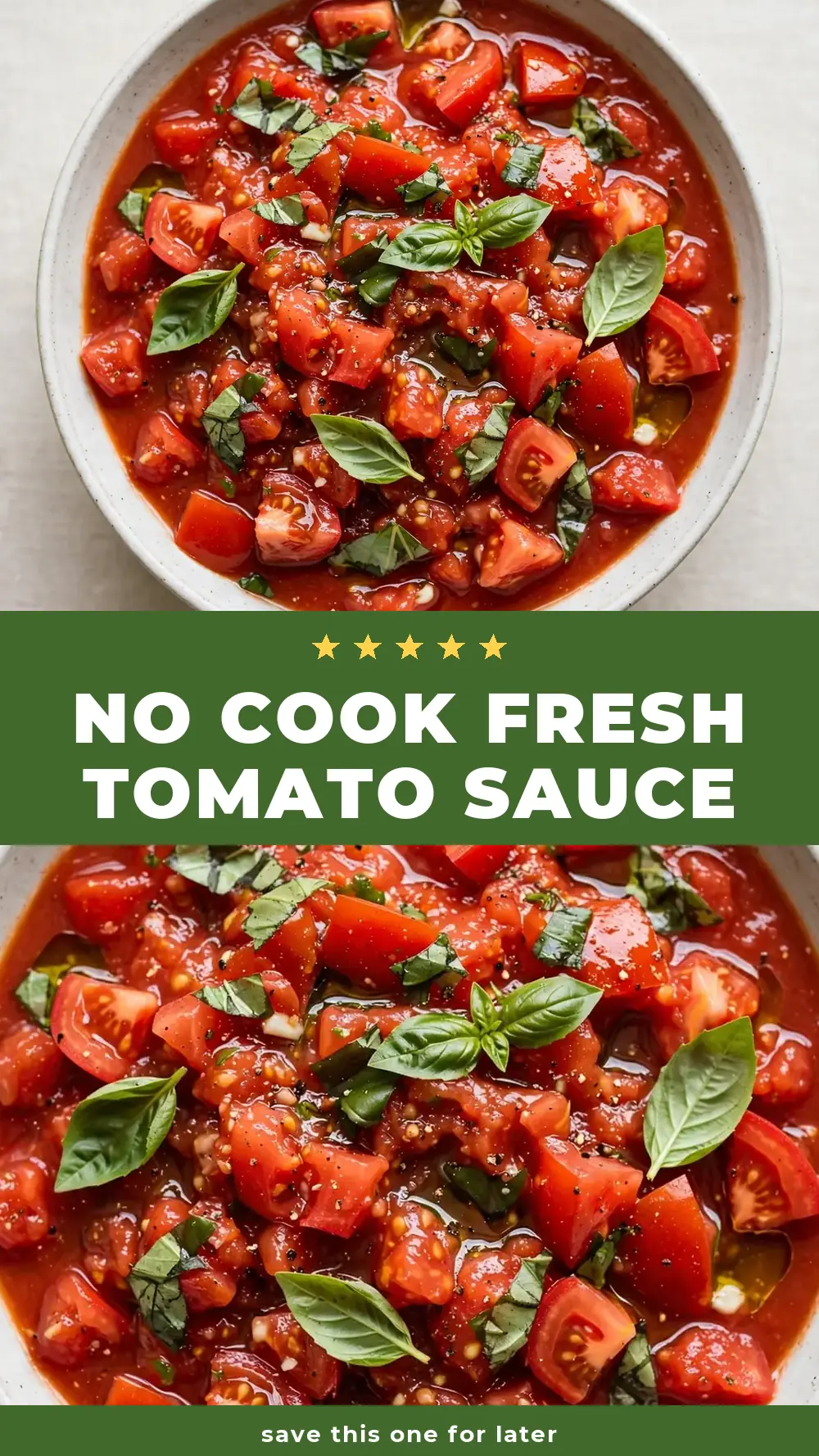
- Prepare the tomatoes: Wash the tomatoes and cut out the tough green core at the top. Roughly chop them into 1-2 cm chunks. You want some texture, not a puree. You should see a vibrant red colour and plenty of juice pooling on the chopping board.
- Build the base: In a large mixing bowl, combine the chopped tomatoes, minced garlic, torn basil, olive oil, balsamic vinegar, salt, pepper, and caster sugar (if using). The smell should be garlicky, herbaceous, and sharp with vinegar.
- Macerate the sauce: Gently stir everything together until fully combined. The tomatoes will begin to release their juices, creating a beautiful, chunky liquid. Let it sit at room temperature for at least 10 minutes. You will notice the liquid level rising as the salt draws moisture out of the tomatoes.
- Cook the pasta: Bring a large pot of generously salted water to a rolling boil. Add the spaghetti and cook according to package directions until al dente. The pasta should be firm to the bite, with a tiny white speck in the centre when you bite a strand.
- Reserve the pasta water: Just before draining, ladle out about 200 ml of the starchy, cloudy pasta water. This is your secret weapon for creating a silky sauce.
- Combine and toss: Drain the pasta well and immediately add it to the bowl with the tomato sauce. Toss vigorously with tongs for about a minute, adding splashes of the reserved pasta water as you go. The starch from the water will emulsify with the olive oil, creating a creamy, clingy sauce that coats every strand. You’ll see the sauce transform from a separated liquid into a cohesive, glossy coating.
- Finish and serve: Add the grated Parmesan cheese and toss once more. The cheese will melt slightly into the warm pasta, adding a salty, savoury depth. Taste and adjust seasoning with salt and pepper. Serve immediately, topped with a few extra basil leaves and a final crack of black pepper.
Tips From My Kitchen
- Use the right bowl: The key to a successful no-cook sauce is tossing it in a large, wide bowl — not the pasta pot. The extra surface area allows the pasta to cool slightly while you toss, which prevents it from clumping and helps the sauce emulsify properly.
- Don’t skip the rest time: The 10-minute maceration period is crucial. It’s not just about allowing the flavours to marry; it’s about the salt drawing the tomato juices out to form the base of your sauce. If you skip this, your sauce will be dry and chunky.
- Grate your own Parmesan: Pre-grated cheese is coated in anti-caking agents that prevent it from melting smoothly. Grating a block of Parmesan yourself ensures it dissolves into the warm pasta, creating that essential creamy texture without any grittiness.
- Make it ahead for better flavour: If you have the time, prepare the sauce (without the pasta water) up to 8 hours ahead. Cover it and leave it on the kitchen counter. The garlic mellows, the basil infuses, and the tomatoes become even more tender. Just give it a good stir before adding the hot pasta.
- Balance the acidity: Tomatoes vary wildly in acidity depending on their ripeness and variety. If your sauce tastes a little sharp after macerating, add another pinch of caster sugar. If it tastes flat, a tiny extra splash of balsamic vinegar will lift it.
Equipment You’ll Need
- Large mixing bowl
- Sharp chef’s knife and cutting board
- Large pot for boiling pasta
- Tongs for tossing
- Measuring cups and spoons
- Ladle for reserving pasta water
Common Mistakes to Avoid
- Overcrowding the bowl: If you don’t have a large enough bowl, the pasta won’t toss properly and the sauce will pool at the bottom. Use a bowl that’s twice the volume of your cooked pasta to allow for easy, airy tossing.
- Wrong temperature: The pasta must be piping hot when you add it to the sauce. If it sits in the colander for even a minute, it will cool down too much and won’t be able to warm the tomatoes or melt the cheese. Drain it and toss it immediately.
- Skipping the rest time: I cannot stress this enough. The sauce needs those ten minutes to macerate. If you toss the pasta into a sauce that hasn’t rested, you’ll end up with a bowl of lukewarm pasta and hard, un-released tomato chunks.
Delicious Variations to Try
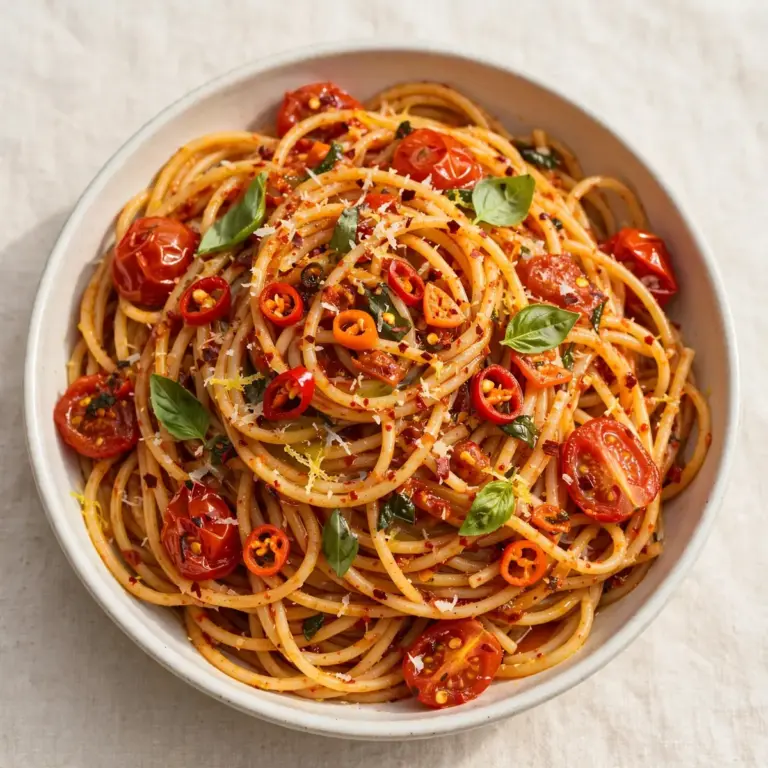
- Spicy Version: Add 1-2 finely chopped fresh red chillies (seeds and all) along with the garlic. Or, for a different kind of heat, stir in a heaped teaspoon of the oil from a jar of sun-dried tomatoes. You might enjoy this style in our Spicy Calabrian Chili Pasta Summer.
- Vegetarian/Vegan Option: This recipe is naturally vegetarian. To make it vegan, simply omit the Parmesan or replace it with 3 tablespoons of nutritional yeast flakes, stirred in at the end for a cheesy, umami flavour.
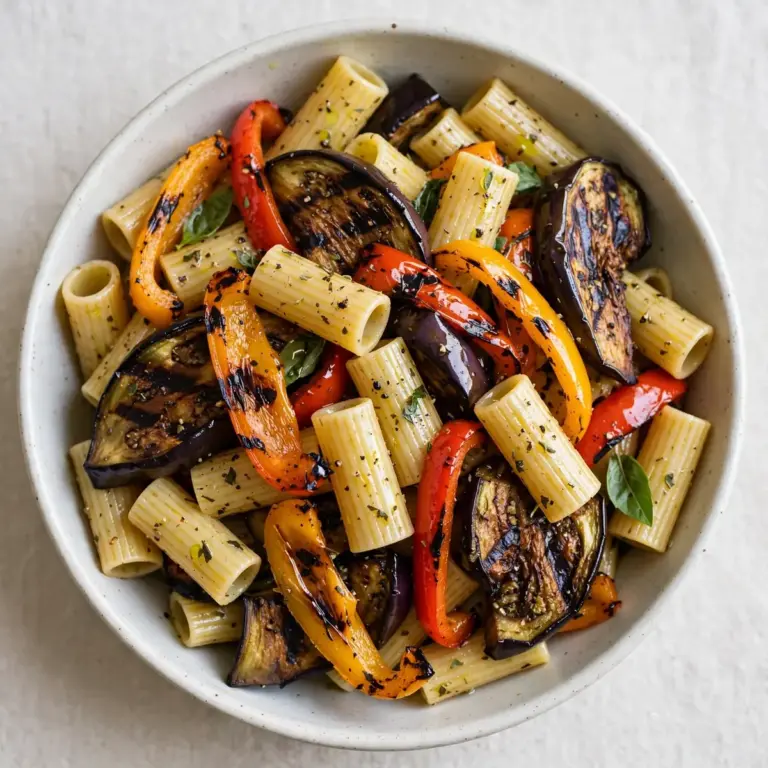
- Different Protein: For a heartier meal, toss in a can of drained and rinsed chickpeas or some shredded leftover roast chicken along with the pasta. The mild flavours of both work beautifully with the fresh tomato base, as seen in our No Bake Pasta Salad Chickpeas.
What to Serve With No Cook Fresh Tomato Sauce
This sauce is so vibrant that it doesn’t need much alongside it. A simple green salad with a lemony dressing provides a crisp contrast. For a more substantial meal, serve it with some crusty bread to mop up any leftover juices from the bowl. If you’re looking for another no-cook summer idea, our Cold Tortellini Salad With Pesto is another brilliant option for a busy week.
- Simple rocket and parmesan salad
- Grilled courgette ribbons
- Garlic bread or crusty ciabatta
Still hungry for ideas? You might also love Creamy Tomato Sauce, Holiday Meatballs Tomato Sauce Recipe from our sister kitchens.
Frequently Asked Questions
no cook fresh tomato sauce
Ingredients
Method
-
Prepare the tomatoes: Wash the tomatoes and cut out the tough green core at the top. Roughly chop them into 1-2 cm chunks. You want some texture, not a puree. You should see a vibrant red colour and plenty of juice pooling on the chopping board.
-
Build the base: In a large mixing bowl, combine the chopped tomatoes, minced garlic, torn basil, olive oil, balsamic vinegar, salt, pepper, and caster sugar (if using). The smell should be garlicky, herbaceous, and sharp with vinegar.
-
Macerate the sauce: Gently stir everything together until fully combined. The tomatoes will begin to release their juices, creating a beautiful, chunky liquid. Let it sit at room temperature for at least 10 minutes. You will notice the liquid level rising as the salt draws moisture out of the tomatoes.
-
Cook the pasta: Bring a large pot of generously salted water to a rolling boil. Add the spaghetti and cook according to package directions until al dente. The pasta should be firm to the bite, with a tiny white speck in the centre when you bite a strand.
-
Reserve the pasta water: Just before draining, ladle out about 200 ml of the starchy, cloudy pasta water. This is your secret weapon for creating a silky sauce.
-
Combine and toss: Drain the pasta well and immediately add it to the bowl with the tomato sauce. Toss vigorously with tongs for about a minute, adding splashes of the reserved pasta water as you go. The starch from the water will emulsify with the olive oil, creating a creamy, clingy sauce that coats every strand. You’ll see the sauce transform from a separated liquid into a cohesive, glossy coating.
-
Finish and serve: Add the grated Parmesan cheese and toss once more. The cheese will melt slightly into the warm pasta, adding a salty, savoury depth. Taste and adjust seasoning with salt and pepper. Serve immediately, topped with a few extra basil leaves and a final crack of black pepper.
Notes
There you have it — a genuinely effortless dinner that feels like a celebration of summer, no matter the day of the week. I hope this no cook fresh tomato sauce becomes a staple in your home, just as it is in mine. I’d love to hear how you get on with it, so please do leave a comment below and share your own twists on the recipe.