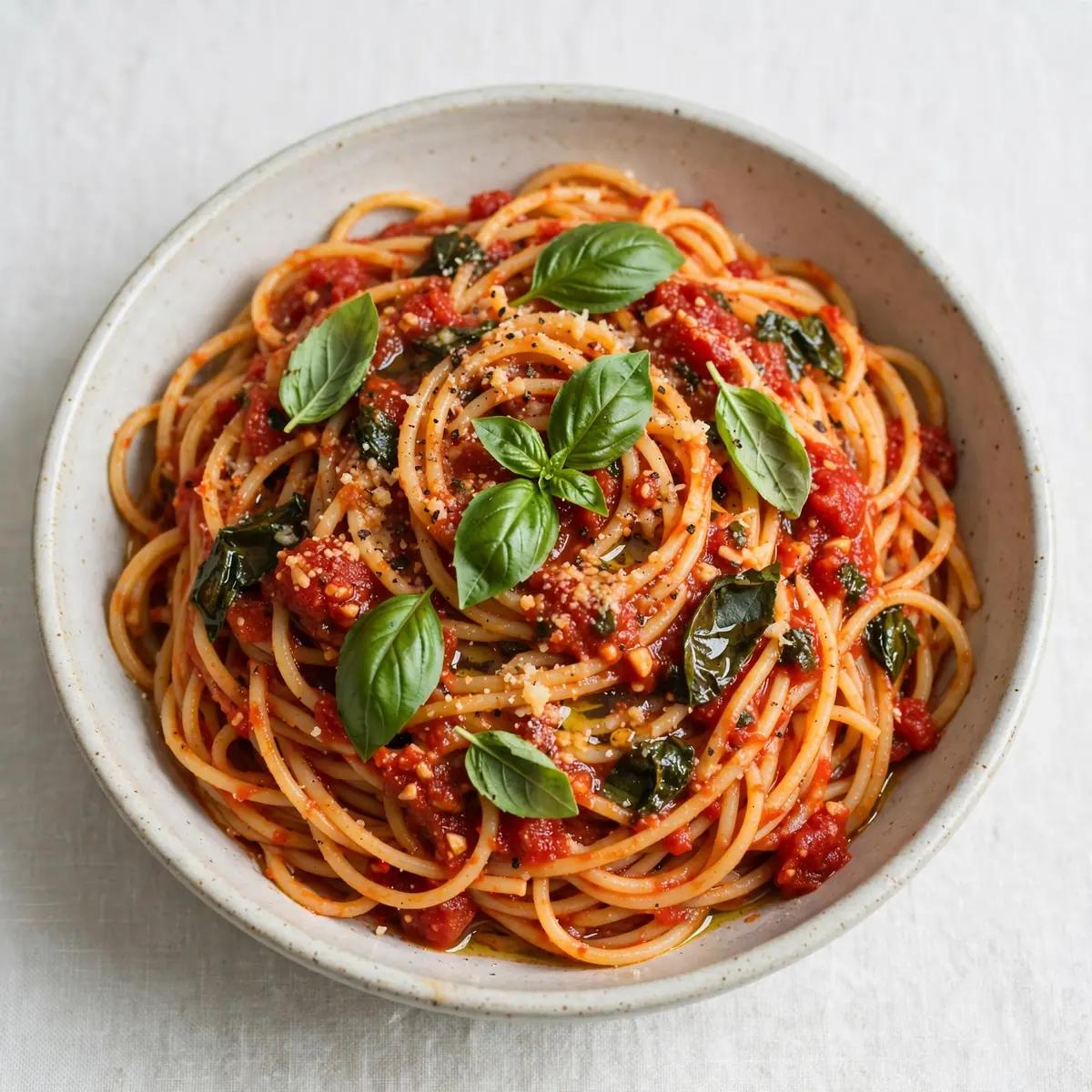
Ingredients
Method
- Sweat the aromatics: Heat the olive oil in a large, deep pot over a medium flame. Add the diced onion and cook for 3-4 minutes, stirring occasionally, until the onion turns translucent and you smell that sweet, savoury aroma. Add the sliced garlic and cook for another 30 seconds until it is fragrant but not coloured.
- Build the sauce base: Pour in both tins of chopped tomatoes, the stock, dried oregano, and sugar. Season with a generous pinch of salt and a few grinds of black pepper. Stir everything together and bring it to a lively simmer. You will see small bubbles breaking across the surface.
- Add the spaghetti whole: Lay the dry spaghetti into the pot in a star pattern — this helps it soften evenly. Press the strands down gently with a wooden spoon so they are submerged in the liquid. The pasta should be mostly covered; don't worry if a few tips poke out.
- Cook the pasta in the sauce: Cover the pot with a lid and reduce the heat to medium-low. Let it cook for about 10-12 minutes. Every 3 minutes, lift the lid and stir the pasta with tongs to prevent it from sticking. You will see the liquid reduce and the pasta become tender.
- Check for doneness: After 10 minutes, taste a strand of spaghetti. It should be al dente — firm to the bite but not chalky in the centre. The sauce should have thickened enough to coat the pasta, looking rich and deep red rather than watery.
- Finish with basil and cheese: Remove the pot from the heat. Toss in the torn basil leaves and stir them through the hot pasta. The heat will wilt the basil instantly, releasing that fresh, peppery scent. Sprinkle over the grated Parmesan and toss once more.
- Rest and serve: Let the pasta sit for 1-2 minutes before serving. This allows the sauce to cling even more to the spaghetti. Spoon into bowls and top with extra basil and cheese if you like.
Notes
For a vegetarian version, use vegetable stock and vegetarian hard cheese. The star pattern when adding spaghetti helps it soften evenly without breaking.